Artificial intelligence (AI) is changing how hotels operate. AI platforms help hotel teams answer guest questions, manage daily tasks, set room rates and improve service. However, not every AI investment delivers clear results.
A 2026 h2c study found that more than 9 in 10 hotels surveyed use AI. Yet only 13% report measurable financial returns. The best AI platforms for the hotel industry depend on each property’s needs.
Small hotels may benefit most from tools that reduce staff workloads. Larger hotels and resorts may focus on guest personalization, revenue management and booking systems.
Understanding the different AI solutions can help hotel operators choose tools that deliver real value.
Table of Contents:
Hotels use AI for:
Some platforms work on their own, while others add AI features to existing hotel systems. Here are six common types of hotel AI platforms and how they work.
AI chatbots and hotel guest messaging platforms answer common questions without adding work for hotel staff.
Guests can ask about check-in times, parking, WiFi access and hotel amenities. Many platforms work through websites, text messages and messaging apps. Some also support multiple languages.
The benefits of hotel AI chatbots include:
For example, a guest arriving late might ask about parking or check-in instructions. A chatbot can provide an answer without requiring a front desk employee to respond.
Guests also value a balance between technology and personal service. A Mews survey found that 89% of guests appreciate a mix of AI and human-led hospitality.
AI operations platforms help hotels manage housekeeping, maintenance and front desk tasks. They connect guest requests with the teams responsible for completing them.
For example, a request for extra towels goes to housekeeping. A broken light creates a maintenance task. Some platforms also manage multi-step processes. After checkout, an AI system can alert housekeeping and update room status. Once the room is ready, the front desk receives a notification.
These tools help hotels:
Managers can view open tasks and staff progress from one dashboard. This makes it easier to spot delays and adjust workloads.
At THE FLAG in Zurich, the hotel uses an AI platform called Sweeply. It reads reservation comments and guest feedback in the property management system (PMS) to help manage hotel tasks. For small hotels, these tools can reduce work for limited staff. Larger properties can use them to coordinate teams across many rooms and departments.
AI personalization platforms use guest preferences, booking details and past stays to suggest relevant services. Hotels can use this information to send offers that match each guest’s interests.
For example, a guest arriving early might receive a message about spa appointments. Families could get recommendations for nearby attractions. Returning business travelers might receive express check-in options. Hotels can personalize messages throughout the guest journey:
These messages can improve the guest experience while creating more opportunities for additional revenue.
At Flanigan’s Resort & Spa near Zion National Park, the hotel reported a 57% increase in ancillary revenue. The increase came during its first year using AI guest messaging, mobile check-in and digital upselling. Hotels should also protect guest information and respect communication preferences when using these tools.
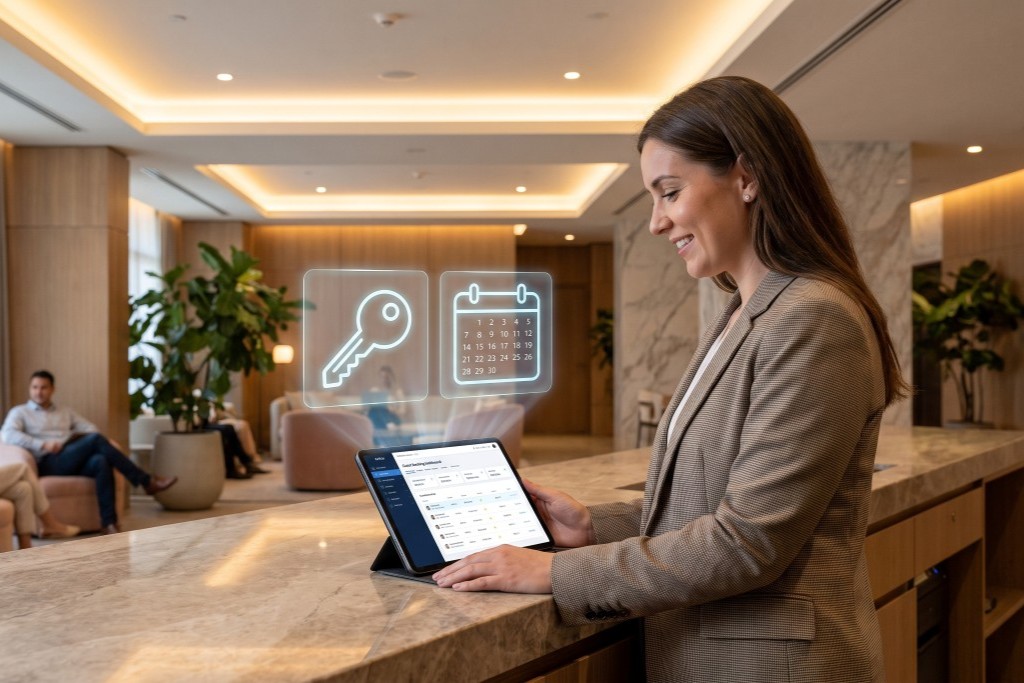
AI booking assistants help travelers find rooms, check availability and make reservations. These platforms answer questions about room types, rates and amenities. Some work through websites and messaging apps, while others handle phone calls.
Many connect directly to hotel booking systems. This allows them to share current prices and room availability. For example, a traveler might ask whether connecting rooms are available for a weekend stay. An AI assistant can check available options and guide the guest toward booking.
These tools help hotels:
AI booking assistants can also help hotels encourage direct reservations instead of relying on online travel agencies (OTAs). Wyndham, for example, introduced Canary’s AI voice system. The system answers guest calls, shares hotel information and helps travelers make reservations.
To work well, booking assistants need access to accurate rates and room inventory. Hotels should confirm that these tools connect with their existing reservation systems.
AI revenue management platforms help hotels make pricing and inventory decisions. They study booking trends, occupancy, past performance and market demand. Hotel revenue teams often spend hours reviewing rates and comparing data. AI can complete much of this analysis faster.
For example, a hotel near a convention center may see demand rise during a major event. An AI platform can spot the trend and suggest room rate changes.
Common features include:
These platforms also help teams understand how booking habits change over time. Staff can use the findings to adjust rates and plan for busy or slow periods.
Revenue management is one way hotels can use technology to improve profit margins. Results depend on the property and the tools used. However, 7 Hospitality in the UK reported more than 9% growth in revenue per available room (RevPAR) after adopting Access Hospitality’s revenue management system.
A 17-room boutique hotel in Fort Lauderdale also reported a 12% RevPAR increase after changing its pricing tools. These examples show how AI can support revenue growth, although individual results will vary.
AI marketing platforms help hotels reach guests with more relevant offers and messages. These tools study booking history, guest interests and campaign results. Marketing teams can use the information to create targeted campaigns.
For example, a resort might send different offers to families, business travelers and returning guests. AI can help identify which messages work best for each group. Common uses include:
AI can also help marketing teams understand which campaigns lead to reservations. This makes it easier to focus spending on effective channels.
Radisson Hotel Group used Google Cloud’s Vertex AI and BigQuery to improve its advertising process. The company reported a 22% increase in ad-driven revenue and a 35% increase in return on ad spend. Its media teams also became 50% more productive. Work that once took weeks to translate could be completed in hours.
Hotel marketing teams should still review AI content before publishing it. Staff need to check that messages are accurate, clear and consistent with the brand.
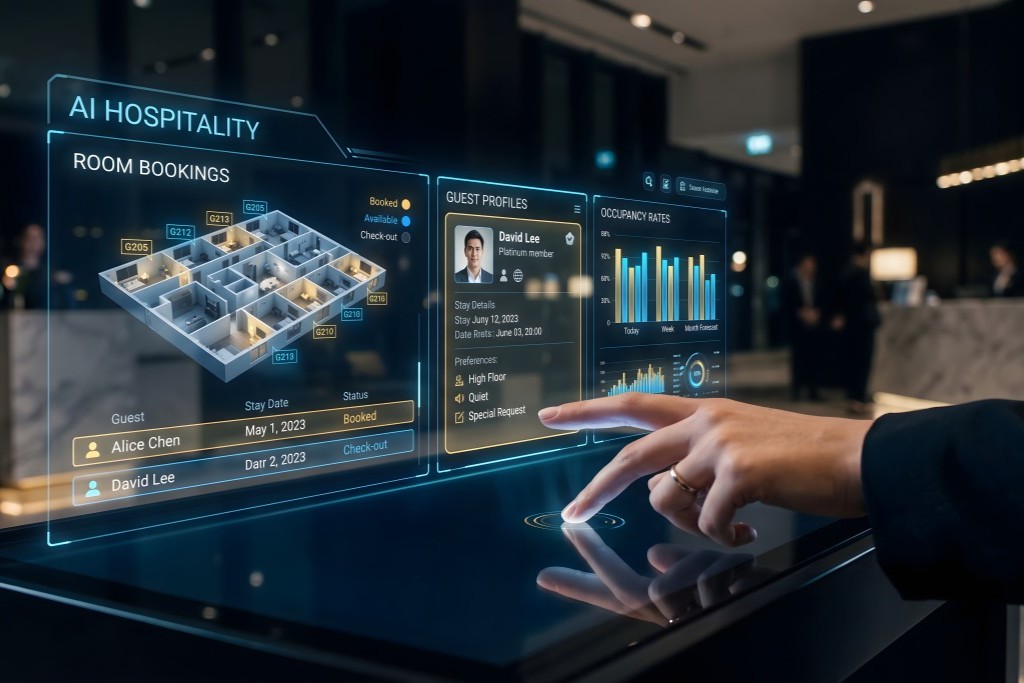
The right AI platform should solve a clear problem and work with your existing hotel systems. Before choosing a platform, consider these factors:
Hotels can also test a platform in one department before using it across the property. A smaller trial helps teams find problems, train employees and measure early results.
Hotels should track results to understand whether an AI platform is worth the investment. The right measures depend on the tool and its purpose.
For guest messaging, hotels can track response times, guest satisfaction and the number of questions AI answers without staff help. Operations teams can measure how quickly employees complete tasks and how much time automation saves.
Revenue and marketing teams can monitor direct bookings, room revenue, guest spending and campaign results. Start by measuring performance before adding AI. Then compare the results after the platform has been in use for a set period.
Hotels should also include subscription costs, setup fees, training and ongoing support when calculating ROI. These measures help hotel operators decide which AI tools provide value and where they should invest next.
Hotel AI platforms need reliable internet access to share information between systems, devices and staff. Guest messaging tools connect with reservation systems. Housekeeping platforms send updates to employee devices. Revenue management tools rely on current booking and pricing data.
If the network performs poorly, these systems may experience delays or lose access to important information. Other hotel technologies add to network demand. These include smart room technology, Internet of Things (IoT) devices and connected guest services.
For example, housekeeping staff need reliable WiFi to receive assignments and update room status. Poor coverage in guest hallways or service areas can slow these tasks. Hotels should consider several network needs when adding AI:
These needs apply to both large resorts and small hotels. Even properties with fewer rooms may use several online systems for bookings, guest services and daily tasks. A well-designed network helps hotels get more value from these tools.
Blueprint RF, now part of Spectrum, designs custom WiFi networks for hospitality properties. Our services include real-time network monitoring and dedicated support to help keep guests and hotel systems connected.
Choosing the right AI platform is an important step. Reliable WiFi helps those tools perform as intended. Explore Blueprint RF’s managed WiFi solutions and contact our team to discuss your hotel’s network needs.