
Walk into a hotel room today, and the technology features are completely different from just a few years ago. Smart mirrors display weather updates and flight information. Voice commands control lighting and temperature. AI concierge addresses immediate questions and needs. The challenge for hotels is not whether to adopt these technologies, but how to find a sweet spot in their use without overwhelming guests.
This shift has changed how hotels think about room design. Hotel room trends that once felt futuristic are now standard at major chains. Voice controls, mobile keys, and sensor controls are becoming mainstay features rather than luxury add-ons. The difference between a good experience and a great one often comes down to how seamlessly these systems work.
But not all hotel smart room technology delivers on its promise. Some features overwhelm guests or require too much explanation at check-in. The best implementations are invisible until you need them. They give guests flexibility and control while keeping the experience frictionless. When implemented mindfully, smart rooms enhance comfort and convenience without adding stress or confusion.
So, which smart room technologies actually matter to guests? In this guide, we examine the latest generation of smart technology for hotel rooms and share five examples that strike the right balance.
Table of Contents:
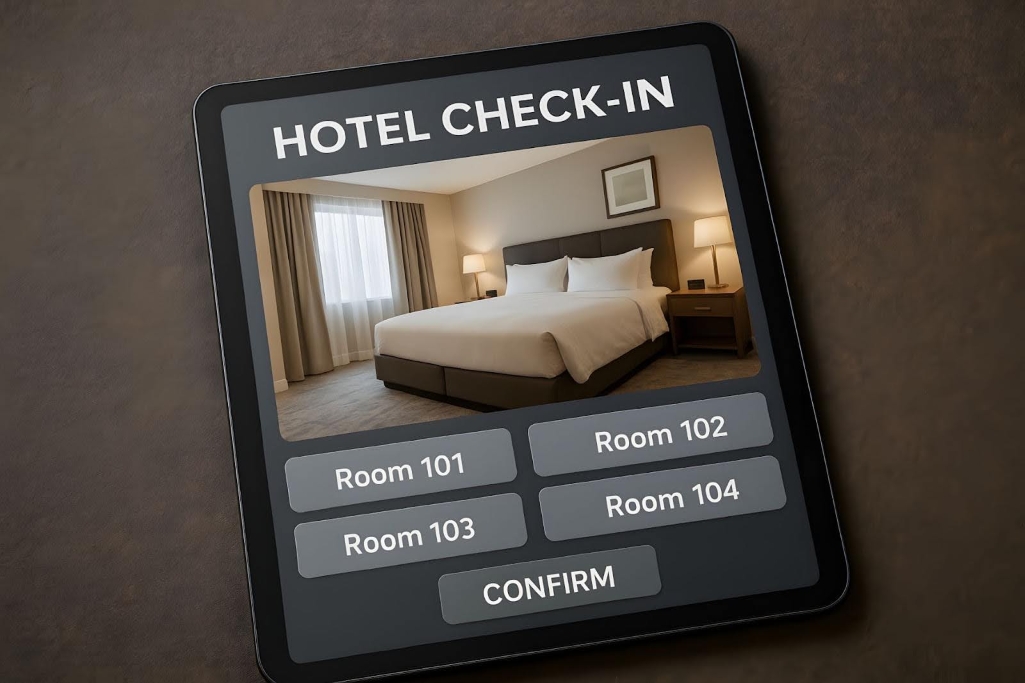
Hotel smart room technology uses Internet-enabled devices to give guests direct control over their room environment. Smart rooms link devices like thermostats, lighting, window shades, and entertainment systems via WiFi or Bluetooth connectivity. Guests interact with these features using smartphones, tablets, voice assistants or in-room control panels.
The technology operates through a network of sensors, smart switches and connected devices that communicate with each other. For example, guests can set room temperatures on their phones before arrival, issue voice commands to adjust light levels, or use control tablets to order additional bath towels. System commands can also be scheduled to conserve energy by shutting off control of lights and temperature in vacant rooms.
The 2025 Hotel Room Innsights report from Hotels.com (which surveyed 450 properties worldwide) reveals that 56% of hoteliers feel pressure to continue upgrading “smart” in-room technology. Despite the push for low-touch tech upgrades, the report found that 70% of hotels say guests still prefer human interaction, especially at check-in.
“The upgrades that deliver comfort and are intuitive to use—what Hotels.com calls ‘ComfortTech’—are quickly becoming non-negotiable,” says Emily Goldfischer, the Founder of hertelier, a platform for women in hospitality. “Think fast Wi-Fi, streaming on smart TVs, easy-to-use lighting and climate controls, and a few thoughtful sustainability features.”

So what are the best ways to use hotel smart room technology? These five smart room ideas offer some of the highest utility to guests, solving the inconveniences of standard hotel rooms. Additionally, several of these services can lead to positive ROI for hoteliers.
Over the last few years, mobile key technologies have become one of the most requested smart room technologies. Guests arriving at a hotel can check in using a hotel app and receive a digital key on their smartphones. This process eliminates the need to stop at the front desk and to keep track of plastic keycards. The technology works with Bluetooth and NFC (near-field communication), which allows unlocking doors to their rooms and access to elevators, fitness centers, and hotel amenities with the simple tap of their smartphone.
Major hotel chains have invested heavily in this technology. Hilton offers Digital Key access across thousands of properties worldwide, available on the Hilton Honors app. The guests receive a push notification when their room is ready, and they can go directly to their room. Marriott has also deployed mobile keys across its global properties, so hotel loyalty members do not have to go to the front desk.
A study by Oracle Hospitality and Skift found that 73% of travelers want to use their mobile devices to navigate their hotel experience, including check-in and check-out. This expectation is the same across the entire industry; travelers want to have control and convenience with the least amount of friction possible.
Bathrooms are beginning to get a high-tech upgrade in hotel rooms. According to Goldfischer, “Hotels are pouring money into smart mirrors that give you the weather while you brush your teeth, digital water controls, colour-changing shower heads, and yes, Japanese toilets.”
Smart mirrors now function as interactive hubs that display weather forecasts, news updates and flight information while guests get ready for the day. These mirrors often include built-in lighting controls, Bluetooth speakers for music or calls and even touchscreen interfaces for ordering room service or booking spa appointments. Motion-sensor faucets and smart toilets with heated seats and bidet functions are also becoming standard in upscale properties.
The Sinclair Hotel in Fort Worth recently integrated smart bathroom technology throughout its property. Guests can access hotel services directly from bathroom mirrors without needing to call the front desk or fumble with their phones. Some luxury hotels are also experimenting with chromotherapy lighting and aromatherapy, transforming bathrooms into wellness spaces. The focus is on creating a spa-like experience that feels intuitive rather than overwhelming. Smart bathroom features work best when they enhance comfort without requiring guests to navigate complicated menus or settings.
Voice control has shifted from novelty to necessity. About 78% of hotel operators expect voice-activated controls for lighting, air conditioning and room devices to become mainstream by the end of 2025. Guests can walk into their room and adjust the temperature, dim the lights or close the window shades without touching a single switch. Some systems allow custom voice commands for specific scenarios, like “meeting mode,” which adjusts lighting for video calls and activates do-not-disturb settings.
Grand Copthorne Waterfront in Singapore has integrated Aiello Voice Assistant throughout its property. The system connects directly with the hotel’s property management system to personalize responses based on guest preferences. Guests can order room service, request housekeeping, or ask for local recommendations through simple voice commands.
Research shows that 43% of travelers want the ability to control room lighting and temperature with voice-activated devices. The appeal is obvious: voice control removes friction from everyday tasks and allows guests to customize their environment without navigating apps or wall panels.
AI has transformed how hotels anticipate and respond to guest needs. Virtual concierges powered by artificial intelligence can now remember guest preferences from previous stays and offer personalized recommendations for dining, activities and services.
These systems operate around the clock, providing instant responses in multiple languages without putting additional pressure on front desk staff. According to Muhammad Tanveer, a global top 100 hospitality leader, “Hotels using AI-driven personalization have reported up to 30% higher upsell conversions and 20% faster response times.”
Marriott’s personalized experience platform analyzes individual guest preferences across the entire stay journey. The system sends tailored pre-arrival messages, suggests room upgrades at optimal moments, and recommends spa services based on past behavior.
The Accor Group uses AI to analyze guest behaviors and create bespoke room configurations, dining suggestions, and activity recommendations. Tanveer highlights one boutique hotel in Dubai that used AI insights to identify that corporate travelers often extended stays when offered late checkout and workspace upgrades, leading them to launch a targeted loyalty program that boosted repeat bookings. The technology works because it feels less like automation and more like genuine hospitality.
Smart energy management systems deliver measurable cost savings while addressing sustainability goals. Occupancy-based automation adjusts heating, cooling and lighting when rooms are vacant. Hotels implementing these systems report HVAC runtime reductions of up to 30% and overall energy savings of 25% to 35%. The technology uses sensors to detect guest presence and automatically shifts to energy-saving modes when rooms are empty.
The Courtyard Hotel achieved a 39% decrease in HVAC energy use through smart automation upgrades. Systems like Honeywell INNCOM and Verdant use occupancy detection and integrate with property management systems to optimize temperature setbacks in unrented rooms.
These platforms pre-cool or pre-heat rooms before guests arrive, so comfort is never compromised. Some hotels also use smart thermostats with AI-powered algorithms that adapt to each room in real time based on weather conditions, time of day and occupancy patterns. The best part for guests is that this all happens invisibly. They walk into a comfortable room without realizing the system was just in energy-saving mode minutes earlier.
Smart room technology should enhance hospitality, not replace it. Hotels that get this right use automation to handle routine tasks while freeing staff to focus on meaningful guest interactions. The goal is to give guests flexibility and control without overwhelming them with features that require tutorials or troubleshooting.
As Goldfischer puts it, “The takeaway is simple: smart rooms only work when guests feel smart using them. The winners won’t be the ones with the flashiest gadgets, but the ones that balance innovation with clarity and keep comfort, with human connection at the core.”
Some hotels have found success by offering both options. Guests can choose self-service check-in through mobile apps or receive a traditional welcome at the front desk. Smart rooms automatically adjust temperature and lighting based on occupancy, but guests can still pick up the phone and speak with someone if they prefer.
The straightforward lesson for hoteliers is to automate the mundane, humanize the unique. Let sensors manage energy consumption and mobile apps handle routine requests. But preserve the personal touches that turn a good stay into a great one. Technology can remember a guest’s preferred room temperature. Only people can deliver the warm greeting, thoughtful recommendation, or empathetic problem-solving that builds loyalty. The hotels that win in guest satisfaction are those that use smart room technology to amplify human hospitality rather than replace it.
Smart room technology only works when your WiFi network can support it. Mobile keys, voice controls, AI concierges and energy management systems all depend on fast, reliable connectivity that operates seamlessly across your entire property. Blueprint RF specializes in managed network solutions designed specifically for hospitality. Our custom WiFi networks support the smart room features your guests expect while providing real-time monitoring and 24/7 support to keep everything running smoothly.
Ready to upgrade your property with smart room technology? Contact Blueprint RF today to learn how our hospitality-focused connectivity solutions can power your next innovation.