
Hotel lobbies, by default, are becoming impromptu coworking spaces for digital nomads and business travelers. Some people use the lobbies for WiFi. Others extend their stay just to have another couple of hours of workspace. This is an underutilized revenue stream that savvy hotels are now capturing.
Coworking spaces are designated work areas (typically in unused hotel spaces) with many of the same features and services as office-based coworking facilities, including comfortable, flexible seating and high-speed internet. They create revenue streams from underutilized space and address the changing needs of the modern business traveler.
Coworking spaces also provide a host of additional benefits beyond merely filling space. A well-designed coworking space may attract remote workers, generate incremental revenue via day passes and membership fees and provide a competitive advantage over other hotels in the area. There’s a single common denominator that makes or breaks every hotel coworking space: the ability to deliver reliable, fast, high-performance WiFi that can handle multiple users at once.
Table of Contents:
The growth trajectory of the coworking market is hard for hospitality leaders to ignore. Market Research projects the industry to grow from $25 billion in 2025 to about $93 billion by 2035. In turn, the business opportunity for hotel coworking spaces is much broader than simply utilizing empty meeting space. They offer numerous revenue opportunities and an attractive alternative for a large number of travelers increasingly looking for destinations to work while on vacation (otherwise known as bleisure travel).
Coworking spaces in hotels can generate additional revenue through day passes, hourly rentals and membership programs, all independent of hotel room bookings. Coworking spaces allow hotels to utilize a larger portion of their existing physical footprint without investing in significant renovations or new construction.
As hotels continue to compete for group business, many modern business travelers expect hotels to serve as productive workplaces as well as comfortable places to stay. If hotels can provide a quality coworking space, they can offer a competitive advantage over other hotels when groups book accommodations for their traveling employees. Many of these professionals extend their stays if they can find hotels that meet their work needs.
Digital nomads are one of the fastest-growing segments of travelers seeking longer-term accommodations. A recent report found that the number of digital nomads with traditional jobs increased by 10% in 2025, reaching 11.2 million. These remote workers have specific requirements for a long-term workspace, including reliable internet and technology infrastructure. Providing digital nomads with a high-quality coworking space can help hotels retain guests who book longer-term stays and, in turn, attract repeat guests.
Coworking spaces, by nature, promote networking among professionals from diverse backgrounds. While many professionals seek coworking spaces for their individual productivity, these spaces also serve as gathering hubs that foster a community of people working together, creating a collaborative environment where businesses form and grow.
Hotels may currently offer restaurants, fitness centers, cafes- and concierge services that most standalone coworking spaces do not provide. When guests use coworking spaces in hotels, they also consume multiple revenue-generating services throughout their workday. This multi-service experience is what separates hotel coworking spaces from traditional office environments.

By understanding the specific requirements of remote workers, you can differentiate between a dated business center and a vibrant coworking space. In many cases, the features that you emphasize will ultimately influence whether a professional chooses your property or seeks out a nearby coffee shop. Below are some of the most critical aspects that hotel guests consider most valuable.
There is nothing more frustrating for remote workers than slow, unreliable internet service. For a coworking space within a hotel, high-speed internet is the foundation of any successful operation.
To increase potential income from your property, you can implement tiered pricing for your WiFi service, allowing guests to purchase the bandwidth level that best fits their needs. Tiered service includes basic for general email and web surfing- and premium for video conferencing, large file transfers.
When it comes to work settings, one size does not fit all. In order to appeal to various work styles, you should provide a combination of open collaborative spaces, quiet focus spaces and private offices. Additionally, you can level up your hotel’s coworking space by offering soundproof pods or booths so remote workers have a private space to conduct confidential phone conversations without disrupting other guests.
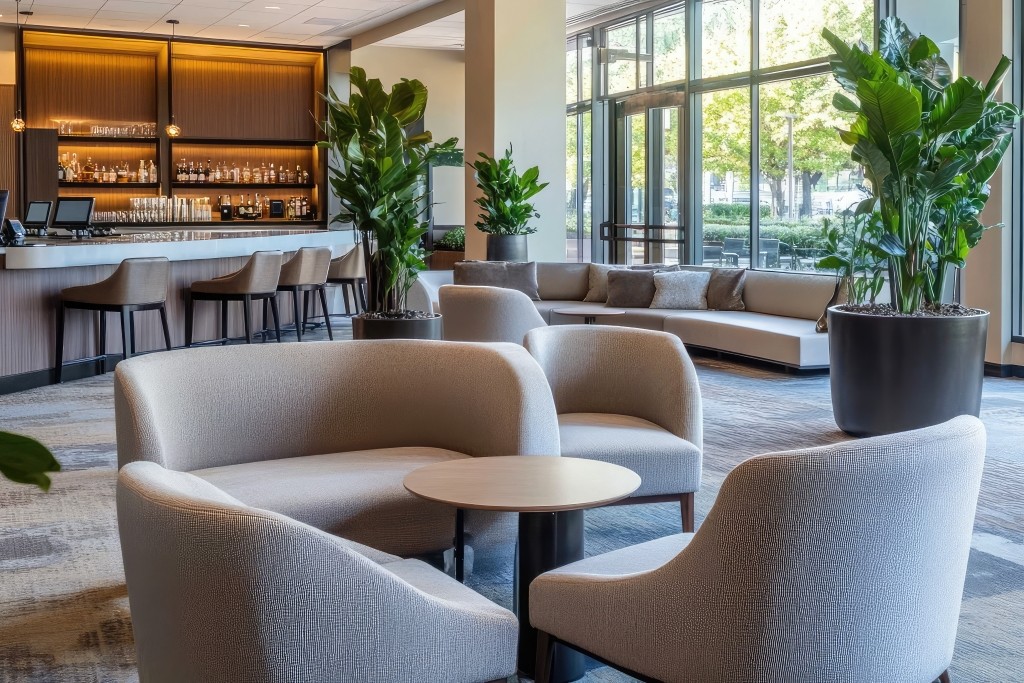
The space should also feature ergonomic furniture, such as adjustable chairs and standing desks, to provide a comfortable workspace for extended periods. Design-led spaces featuring natural light, plants and a variety of seating options can provide a setting that inspires creativity among remote workers and encourages them to continue using your space.
Guests should be able to schedule meeting rooms and private spaces via digital platforms easily. Develop a website for guests to view available meeting rooms, book space- and manage reservations from their devices.
Meeting rooms should be fully equipped with screens, projectors and video conferencing equipment to enable both in-person and virtual meetings. An easy-to-use scheduling system lets guests quickly book a meeting room, reducing friction and showcasing your property as a tech-savvy option.
Remote workers appreciate many of the little things you do to enhance their experience. Providing ample power outlets and charging stations throughout the space means remote workers don’t have to worry about running out of battery power. A cloud-connected printer means guests won’t have to go through a complex process to print documents.
It’s no secret why coworking spaces are constructed next to cafes, restaurants- and bars within hotels. Offering coffee, tea and snacks in your space keeps guests energized and focused without leaving. Many of these business amenities seem like minor considerations, but the existence (or nonexistence) of these amenities has a significant impact on the overall user experience.
Having a staffed front desk or concierge kiosk can provide a professional first impression for remote workers. Team members at the front desk will be able to assist with check-in, answer guest questions, troubleshoot technology-related issues and help guests book additional services.
Unlike coworking spaces without staffed reception areas, this adds a personal touch to your space. As such, the hospitality expertise that hotels inherently offer differentiates your hotel-based coworking space from unmanned coworking facilities.
When you are opening up a hotel coworking space, you have to think about how you are going to price it so it’s both accessible to your guests but isn’t losing money. To find the right balance and create a successful coworking business, here are some ways you can price your coworking space.
Your coworking space is only as strong as the network that powers it. Remote workers can tolerate mediocre coffee or less-than-perfect furniture, but they cannot tolerate unreliable connectivity.
Blueprint RF specializes in managed WiFi solutions tailored to the hospitality industry. Their team handles everything from initial site surveys and infrastructure design to 24/7 monitoring and dedicated support that keeps your hotel WiFi running smoothly. Blueprint RF creates custom WiFi networks that support tiered bandwidth options and seamless connectivity across your entire property. Their managed services free your team from the complexity of network management while ensuring remote professionals get the enterprise-grade performance they require.
Whether you’re launching your first coworking space or upgrading an existing setup, Blueprint RF provides the foundation that turns connectivity from a potential pain point into a competitive advantage.